Trump Calls for Immediate Opening of Hormuz Strait
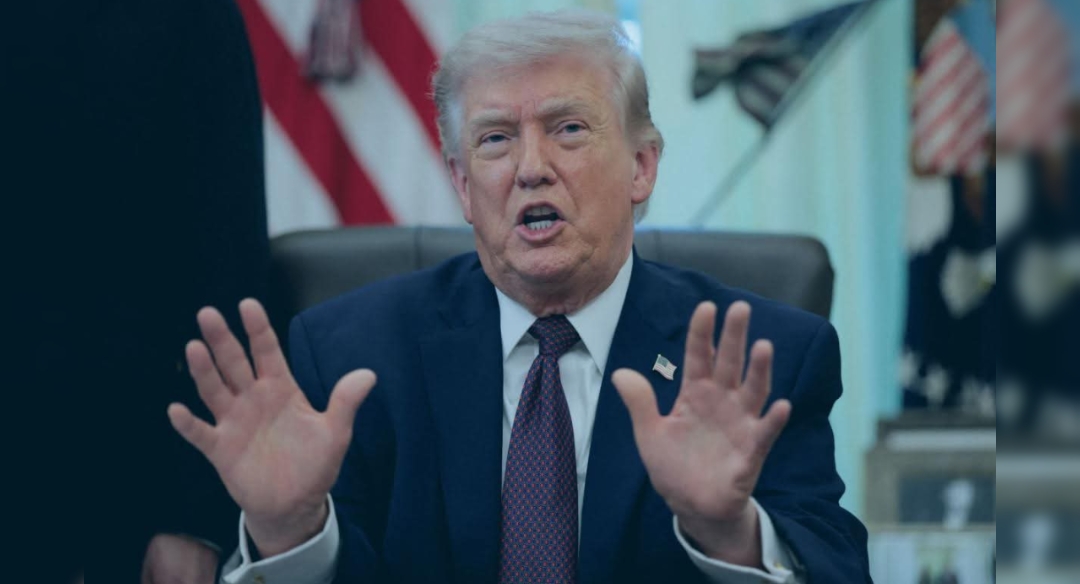
Image : President USA Donald J. Trump. Photo : The White House
SAPNewsTL, International: President USA Donald J Trump said that Iran’s new President Mojtaba Khamenei had requested a temporary peace agreement with the United States. However, Trump stated that the U.S. would only consider it if the Strait of Hormuz is open.
“The new Iranian regime’s president, less radical and more intelligent than his predecessors, has requested a ceasefire from the United States. We will consider it when the Strait of Hormuz is open, free, and clear,” Trump wrote on social media on April 1, 2026
Pope Leo XIV reiterated his call for world peace and welcomed the statement by U.S. President Donald Trump to end the war in the Middle East through dialogue.
The Pontiff invited all world leaders to return to the negotiating table and seek possible solutions to reduce violence.
Pope Leo XIV said he appreciates President Donald Trump’s statement about ending the war in the Middle East by reducing violence and bombings.
“I know that President Trump recently stated that he wants to end the war. I hope he seeks ways to reduce violence and bombings, which would be a significant contribution to eliminating the hatred that continues to grow in the Middle East and elsewhere,” said Pope Leo XIV in the Vatican on March 31, 2026.
The Pope continued his appeal to world leaders to return to dialogue.
“Let us seek solutions to problems, find ways to reduce the violence we promote, so that the world may have peace. At Easter, we must rule with our hearts,” he emphasized.
Meanwhile, the conflict in the Middle East, particularly between Israel and Hamas in the Gaza Strip, has become a major crisis affecting many people. Since the October 2023 attack, the situation remains severe, with ongoing war causing widespread destruction, loss of lives, injuries, and displacement.
According to available data, more than 40,000 people have died in Gaza and over 90,000 have been injured, while in Israel more than 1,200 people have died and thousands have been injured. Additionally, over 1.5 to 2 million people in Gaza have been displaced and are living in extremely difficult conditions.
Coordinated attacks involving the United States and Israel against Iran have resulted in over 3,000 deaths, including civilians and children, with thousands more injured. These figures show that the conflict is not only political or military but also a severe humanitarian crisis.
Currently, instability in the Strait of Hormuz and ongoing attacks are affecting global energy supply, pushing oil prices up to around $100 per barrel.
The Strait of Hormuz is a highly strategic waterway in the Middle East, through which a significant portion of global oil is transported. Located between Iran and Oman, it is a sensitive point in regional conflicts. Rising tensions, especially involving Iran, the United States, and Israel, threaten oil supply and the global economy.
Oil prices fluctuate depending on political and security conditions. Before the conflict, Brent crude ranged between $70 and $80 per barrel. However, during heightened tensions, prices rose to $90–$100 or more due to fears of supply disruption.
This situation shows that geopolitical conflict in the Middle East directly impacts the global economy, especially for countries dependent on oil imports.
The crisis is not only military but also humanitarian. Hospitals, schools, and key infrastructure have been destroyed, and civilians—especially women and children—are the most affected. International organizations such as the United Nations continue to call for an end to violence and increased humanitarian aid.